
We assess cracks, crumbling mortar, loose bricks, water entry, and wall movement to determine the right repair before the damage spreads.
Masonry damage often begins with a small visible change: a cracked joint, a loose brick, staining near a window, or a section of wall that no longer appears level.
These signs may look isolated, but the surface does not always reveal the full condition of the masonry. Water can enter through open joints, damaged bricks, or gaps around openings. Repeated freezing and thawing can then widen cracks, weaken mortar, and increase the size of the affected area.
Moisture entering damaged masonry can gradually increase deterioration through repeated freeze-thaw cycles.
We provide professional masonry repair for homes, duplexes, triplexes, condominiums, multi-residential buildings, commercial properties, and institutional buildings throughout Montréal, Laval, Longueuil, Terrebonne, Saint-Jean-sur-Richelieu, Repentigny, and Granby.
We begin by examining the visible damage and the surrounding masonry. We then explain what may be causing the problem and recommend the work suited to the building.
We preserve sound masonry wherever practical. We do not recommend rebuilding without reason, and we do not rely on surface patching when the condition requires a more complete repair.
Changes in brickwork or mortar should be reviewed before they spread into neighbouring areas.
Contact us when you notice:
Not every warning sign requires the same repair. Deteriorated mortar may call for repointing. Cracked or spalling bricks may require selective replacement. Movement, separation, or bulging may require stabilization or localized rebuilding.
Repointing may be appropriate when the bricks remain serviceable but the mortar joints are cracked, loose, recessed, or missing. We remove deteriorated mortar to a suitable depth and install new mortar selected for compatibility with the existing masonry.
Proper repointing can help:
Mortar compatibility is especially important on older properties. A mortar that is too hard or poorly matched to the brick may affect how the wall handles moisture and seasonal movement.
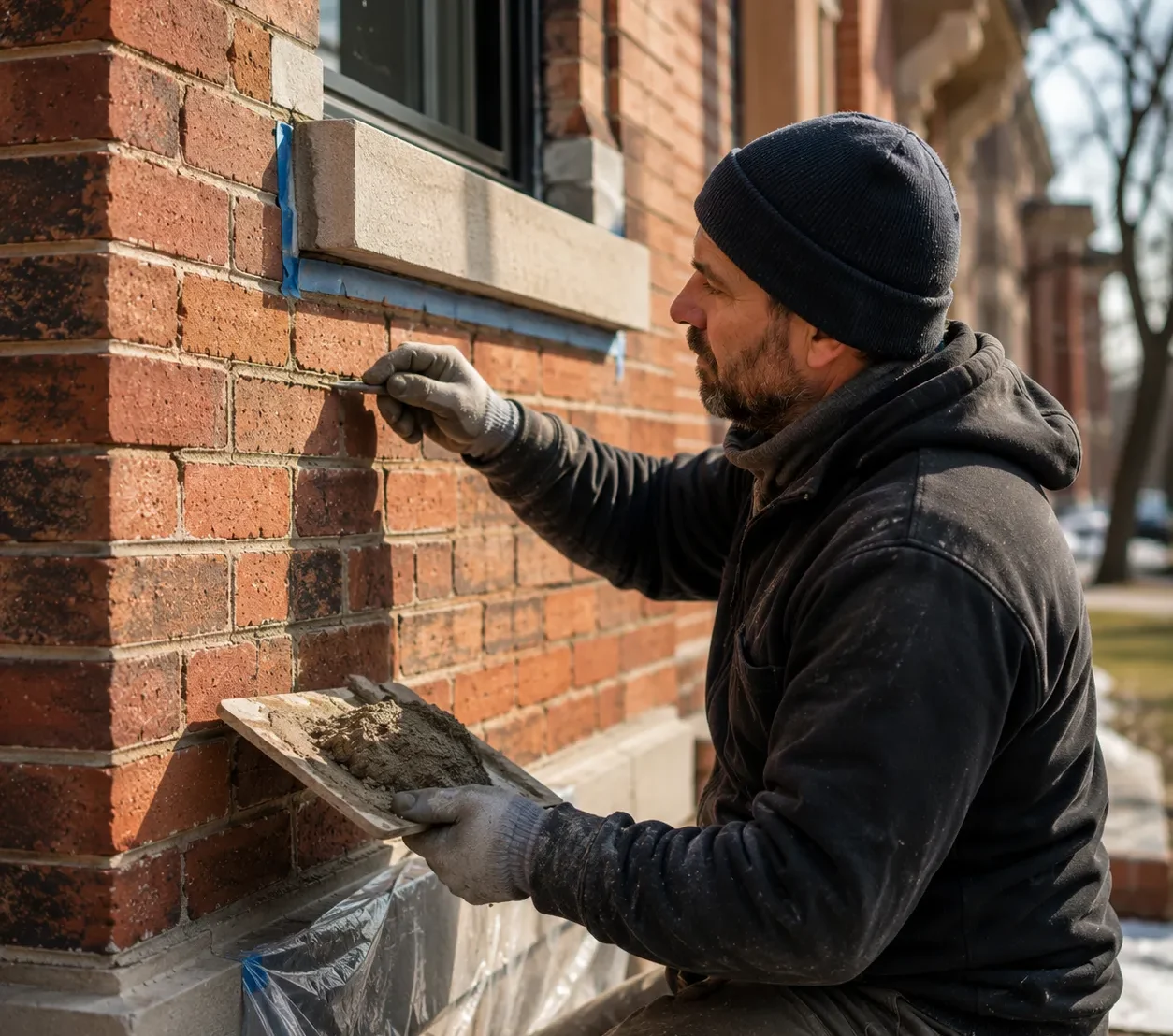
Mortar joints help protect masonry while allowing the wall to manage moisture. When joints crack, erode, or separate from the bricks, water can enter vulnerable areas. During Québec winters, trapped moisture may freeze and expand. Repeated freeze-thaw cycles can contribute to:
Timely masonry repair can help limit further exposure and protect surrounding materials.
We do not examine one damaged joint or brick in isolation. When relevant, we also review openings, lintels, sills, caulking, visible drainage patterns, and signs of movement.
This broader approach helps us determine whether the problem is limited to routine maintenance or connected to a more involved masonry condition.
Repointing may be appropriate when the bricks remain serviceable but the mortar joints are cracked, loose, recessed, or missing. We remove deteriorated mortar to a suitable depth and install new mortar selected for compatibility with the existing masonry.
Proper repointing can help:
Mortar compatibility is especially important on older properties. A mortar that is too hard or poorly matched to the brick may affect how the wall handles moisture and seasonal movement.
Individual bricks may need replacement when they are badly cracked, loose, broken, or spalling.
Our brick masonry repair work is designed to correct damaged areas while preserving sound surrounding masonry wherever possible.
We consider:
Selective brick replacement can often be combined with repointing so the repaired area performs and appears more consistently as a whole.
Cracks may develop because of mortar deterioration, settlement, movement around openings, lintel corrosion, moisture, or previous repairs.
We assess the crack pattern and location before recommending a method.
A crack limited to mortar joints may require a different repair from one that passes through several bricks or appears beside visible movement. Depending on the condition, the work may include repointing, brick replacement, localized rebuilding, or correction around an opening.
A wall that is bulging, separating, or shifting requires closer attention.
When the masonry is no longer stable, we may recommend:
We explain which masonry can remain in place and which areas require reconstruction.
Older façades often show several types of deterioration at once, including worn joints, damaged bricks, previous patches, and moisture-related damage.
A coordinated restoration may combine:
This allows us to treat the wall as a connected assembly rather than addressing each visible defect separately.
Property owners often contact us after receiving different opinions or because they are unsure how much of the wall needs repair.
We provide a clear scope and explain:
This clarity helps you understand the difference between a targeted repair and a more extensive project.
We preserve sound masonry where practical. At the same time, we do not recommend a temporary patch when the visible condition points to a deeper issue.
Repointing may be appropriate when the bricks remain serviceable but the mortar joints are cracked, loose, recessed, or missing. We remove deteriorated mortar to a suitable depth and install new mortar selected for compatibility with the existing masonry.
Proper repointing can help:
Mortar compatibility is especially important on older properties. A mortar that is too hard or poorly matched to the brick may affect how the wall handles moisture and seasonal movement.
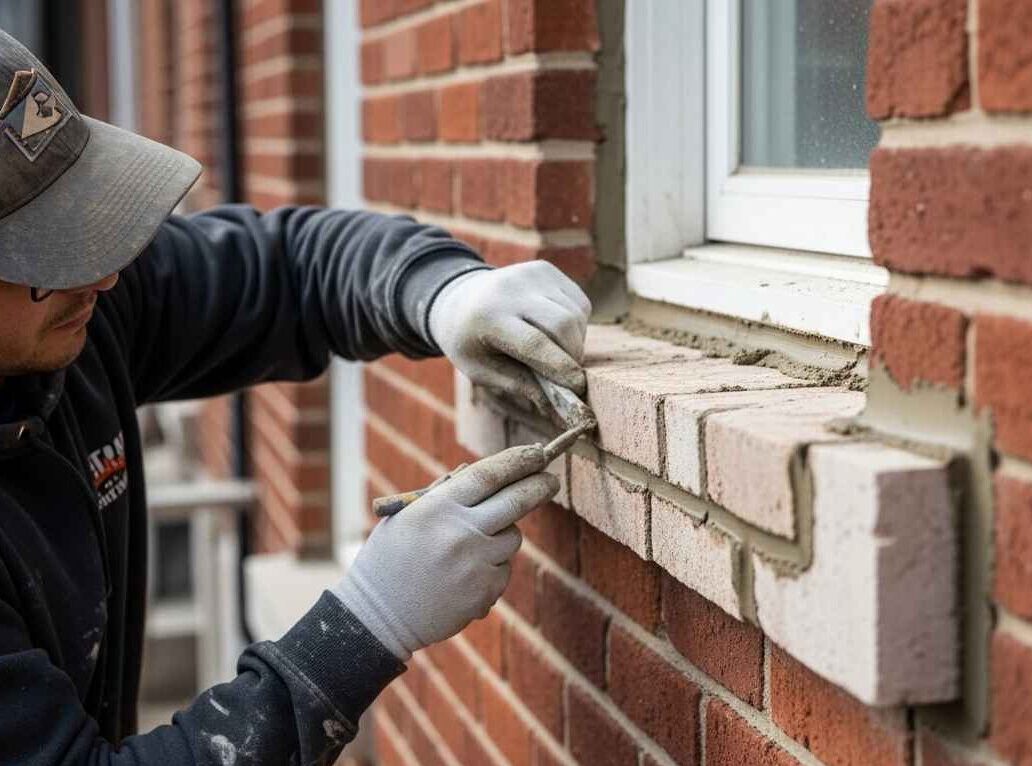
A masonry repair should restore performance while integrating naturally with the existing building.
Brick dimensions
Colour variation
Surface texture
Mortar colour
Mortar composition
Joint width
Joint profile
Tooling and finish
Compatible materials also support long-term performance. Older masonry may require mortar with different characteristics from those used in newer construction.
We preserve original masonry wherever practical and select replacement materials with both performance and appearance in mind.
When property owners search for masonry repair near me, they are usually looking for more than proximity. They want qualified masonry professionals who understand local building materials, weather exposure, and repair requirements.
We serve:
Our work is adapted to the conditions that affect masonry across Québec, including moisture exposure, temperature changes, winter weather, and repeated freeze-thaw cycles.
We hold RBQ licence 5743-4037-01 and work on residential, multi-residential, commercial, and institutional properties.
Send us photos or schedule an on-site visit to discuss your masonry repair needs.
Brique Maçonnerie
RBQ licence: 5743-4037-01
Phone: (819) 743-8142
Email: Info@emcorpinc.ca
Website: briquemaconnerie.ca/en/